
The short answer
A loading phase is not required for muscle creatine stores to rise. Research has compared faster loading with a more gradual daily approach. The main distinction is the time taken to increase those stores, rather than a universal requirement to start with a large amount. 1
That answers the loading question. It does not tell every reader which product, serving or protocol is suitable for them. In particular, a multi-ingredient powder should not be treated as if it were pure creatine.
What does creatine loading mean?
“Loading” describes a short initial period using a higher amount of creatine, followed by a lower ongoing amount. Its purpose in research is to increase muscle creatine stores sooner.
The NIH describes loading and non-loading protocols in its sports-supplement reference. Those descriptions summarize research; they are not a direction to multiply the serving size of whichever product happens to be in your cupboard. 2
Think of three different questions:
- The ingredient question: Can creatine accumulate without a loading phase?
- The personal question: Is a particular supplement appropriate for me?
- The product question: What does this complete formula contain, and how does its label say to use it?
An answer to the first question does not automatically settle the other two.
What the research actually compared
In a 1996 study involving 31 men, Hultman and colleagues observed a roughly 20% rise in muscle total creatine after six days at 20 g daily. A 3 g daily approach produced a similar, more gradual increase over 28 days. Those were study protocols, not ORYN-B product directions. 1
The useful distinction is speed of accumulation. It would be an overreach to say this small study establishes the best personal routine for everyone, or proves equal training results from all approaches.
| Research approach | What it aims to do | What it does not establish |
|---|---|---|
| Short loading phase | Increase muscle creatine stores sooner | That everyone needs to load |
| Lower daily approach over several weeks | Increase stores more gradually | That one fixed timeline applies to everyone |
| Either approach | Study an ingredient under defined conditions | That a finished blended product has been tested the same way |
The study's participants, measurements and duration matter. So does the difference between a change in muscle creatine and a change you notice in the gym.
More creatine in muscle is not a guaranteed performance result
A later placebo-controlled study in trained cyclists examined a 28-day daily approach. Muscle creatine phosphate increased, but the creatine group did not outperform placebo on the study's final sprint-to-exhaustion test. 3
That finding does not erase the broader creatine literature. It shows why the actual outcome being measured matters. Tissue stores, a particular exercise test and a person's broader training experience are different things.
NIH summarizes creatine's strongest performance evidence around repeated, short, high-intensity effort, with individual responses varying. It does not describe a supplement as a substitute for training or a guarantee of better results in every sport. 2
For a useful reading habit, ask: What changed in this study, in whom, and compared with what? That question is more informative than a headline promising faster gains.
Why loading a blend is a different question
A scoop measures the whole powder. It does not necessarily measure only creatine. A blended product may also contain minerals, flavoring or other ingredients.
If you multiply the scoops, you multiply those other ingredients too. A published protocol for creatine alone does not establish that taking several servings of a complete formula is appropriate.
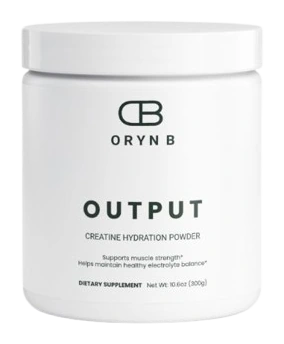
ORYN-B's current pre-launch site describes OUTPUT as a creatine hydration powder with electrolytes. It lists ingredient and serving information in the OUTPUT ingredients section. The final product label must govern actual use.
We are not presenting OUTPUT as a loading product or claiming that its finished formula was tested in the studies above. Do not turn the research amounts in this article into a multi-scoop plan for OUTPUT.
A label-reading example
Imagine two hypothetical powders on a shelf. One lists creatine as its only ingredient. The other combines creatine with several minerals. Even if both prominently mention creatine, increasing a serving changes different things in each product.
The practical step is to read the complete ingredient panel and directions, rather than deciding from the front-of-pack name. This example is about understanding a label; it is not a recommendation to choose or increase either product.
Questions to settle before choosing a routine
You do not need a complicated spreadsheet. You do need a clear reason for the decision you are making.
- What is my actual goal? Distinguish a research question about stores from a personal expectation about training.
- What is in this product? Read all ingredients, their listed amounts and serving directions.
- Am I combining products? Bring the full list to a clinician or qualified sports professional when asking about suitability.
- Am I assuming urgency? A quicker accumulation protocol is not proof that a supplement needs to be started aggressively.
- What will I review later? Keep expectations grounded in the wider training routine, rather than promising yourself a change by a fixed date.
If any of these questions is unresolved, solve the information gap before changing how you use a supplement.
Common questions about creatine loading
Is loading mandatory?
No. The research above shows that stores can rise using a more gradual daily approach. Whether a specific protocol is appropriate for you is a separate question.
Does skipping loading mean creatine cannot work?
No. Loading should not be treated as an on/off switch. The evidence discussed here concerns different ways and timescales of accumulation; it does not promise an individual performance outcome.
Should I take extra OUTPUT scoops to copy a research protocol?
No. This article is not a multi-scoop instruction. OUTPUT is a blended formula, and its final label directions must be followed. Ask a qualified clinician about individual suitability rather than adapting a pure-ingredient protocol yourself.
Is this a clinical review of OUTPUT?
No. It is a brand-authored educational article about creatine research. The cited studies are not trials of ORYN-B's finished product, and no clinical reviewer has been assigned to this article.
One practical takeaway
The loading question is easier to understand when you separate speed, suitability and the complete formula. Loading is an option studied for faster accumulation, not a requirement for everyone.
Before thinking about speed, know what you are taking. See ORYN-B's approach to clear product information and read the full ingredient information alongside the final label.
Sources & editorial notes
Prepared by ORYN-B from the primary research and NIH reference below. This article has not been clinically reviewed. It discusses ingredient research, not a trial of OUTPUT or individualized dosing advice. Product details on the current pre-launch site remain subject to final label verification.
- Hultman et al. (1996): Muscle creatine loading in men. Journal of Applied Physiology. DOI: 10.1152/jappl.1996.81.1.232
- NIH Office of Dietary Supplements: Exercise and Athletic Performance — health professional fact sheet
- Roberts et al. (2010): Effect of 28 days of creatine ingestion on muscle metabolism and performance of a simulated cycling road race
Sources checked 21 October 2026. Recheck changing guidance before implementation.
Start with the whole label.
Explore OUTPUT's listed ingredients and serving information. The site is currently pre-launch; check the final product label before use.
See OUTPUT's ingredient information